
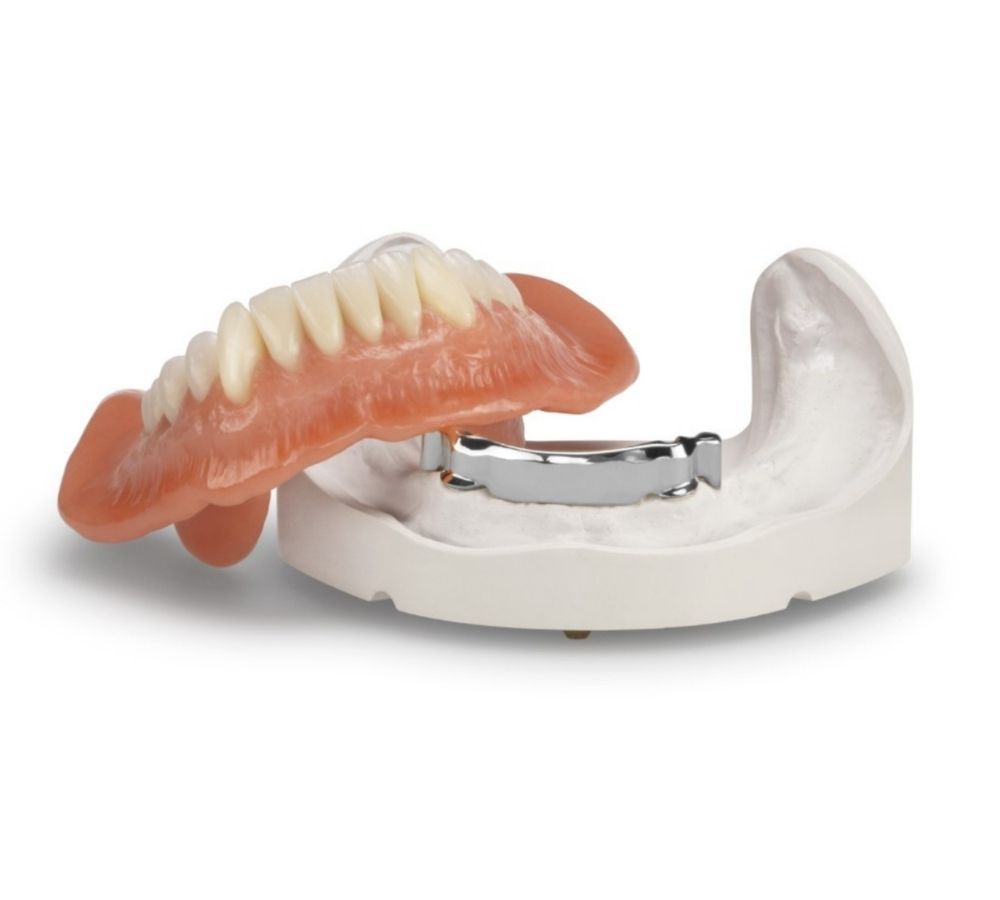
If conventional dentures are loose, unstable, or limiting what you can eat, the problem is usually retention — and no amount of adhesive will fix it permanently. Implant-supported dentures solve the retention problem at its source by anchoring your denture to dental implants placed in the jawbone.
Also known as snap on dentures, snap in dentures, or clip on dentures, these are removable dentures with built-in attachment points that click onto implants. The result is a denture that stays in place during eating and speaking without adhesive, slipping, or the constant awareness that your dentures might move.
For many patients, this is the difference between managing their dentures and forgetting about them.
At D3 Clinic, we design and fabricate the denture component. Implant placement is carried out by trusted implant surgeons we work alongside.
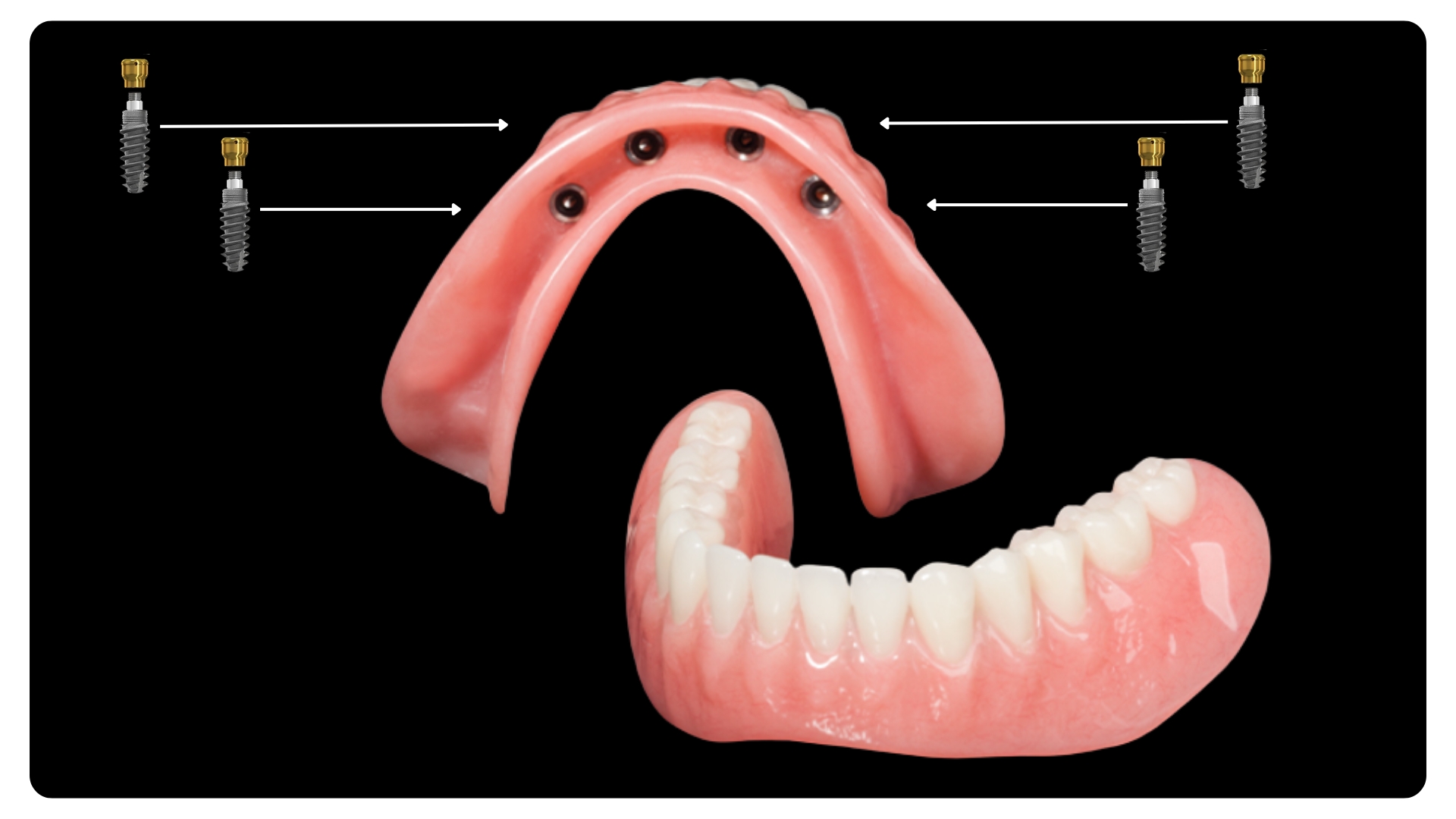
Snap on dentures are overdentures that clip onto 2–4 dental implants using attachment fittings (typically ball-socket or bar-clip systems).
The terms snap on dentures, snap in dentures, and clip on dentures all describe the same thing.
The denture is removable — you take it out for cleaning and overnight — but when it is in place, it is locked to the implants and does not move. This solves the two biggest problems with conventional dentures: instability during eating and the need for adhesives.
Snap on dentures are particularly effective for lower dentures, which are notoriously difficult to stabilise.
Conventional Dentures: Rely on suction (upper) or gravity and muscle control (lower).
-Can shift during eating and speaking.
-Restore approximately 20–25% of natural biting force.
-They do not prevent bone resorption.
Snap On Dentures: Lock onto implants — minimal movement during function.
-Significantly greater biting force.
-No adhesive needed.
-Implants provide bone stimulation that slows resorption.
-Upper dentures can be made without palate coverage, improving taste sensation and reducing gagging.
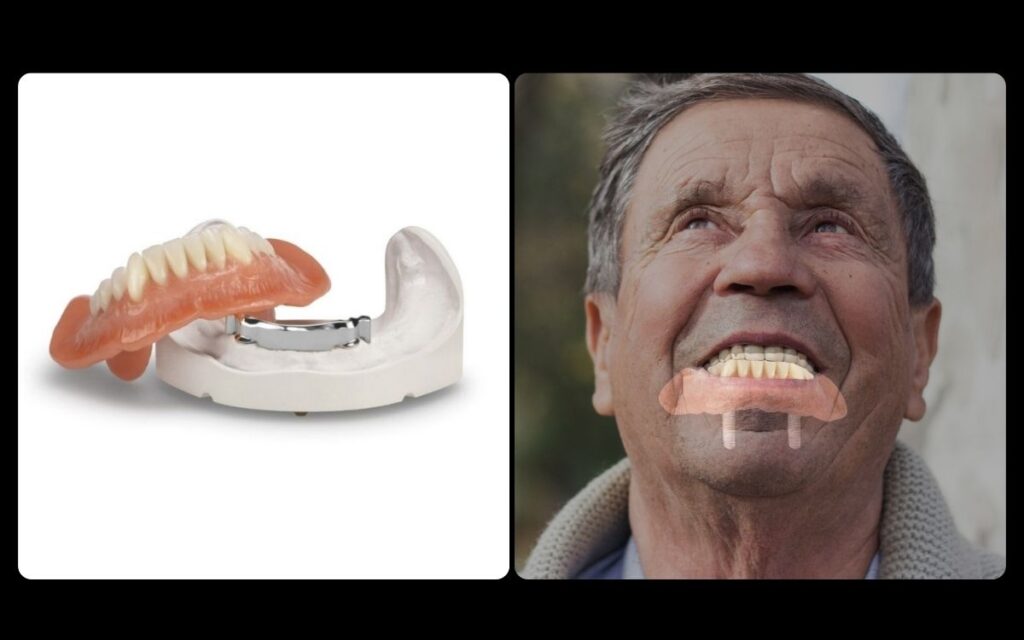
If you are searching for permanent dentures, there are different levels of fixation available:
Implant-Retained Overdentures (Snap On Dentures) — What we provide at D3 Clinic.
These clip securely onto 2–4 implants but can be removed for cleaning and sleeping.
They offer a significant stability upgrade over conventional dentures.
For many patients, this is the practical sweet spot between function, convenience, and cost.
Fixed Implant Solutions (All-on-4 and similar) — A prosthesis permanently screwed onto implants that can only be removed by a clinician. D3 Clinic does not provide fixed solutions as they fall outside our scope as a dedicated removable denture provider.
However, we can discuss how these options work and refer you to a trusted implant provider if a fixed solution is more appropriate for your situation. During your consultation, we help you understand which approach suits your anatomy, function, and budget.
Traditional dentures remain a reliable and effective solution for many patients.
They are non-surgical, more affordable, and can restore appearance, speech, and everyday function when designed properly.
Dental implants provide additional stability and help reduce movement during eating and speaking, but they also involve surgery, higher costs, and are not suitable or necessary for every patient.
Implant-supported dentures (snap-on dentures) combine elements of both approaches — offering improved retention while remaining removable and generally more affordable than full implant restorations.
The right option depends on your anatomy, expectations, lifestyle, and budget.
During your consultation, we explain the advantages and trade-offs of each approach clearly so you can make an informed decision.
The total cost of implant-supported dentures includes both the implant surgery (completed by the surgeon) and the denture with attachment system designed and fitted by us.
Costs vary depending on:
We provide a clear treatment plan and cost breakdown before any treatment begins.
Interest-free payment plans available. HICAPS on-the-spot health fund claiming. Superannuation access may be available for eligible patients 2014 ask us for details. All dentures backed by The D3 Guarantee.
Most patients need 2–4 per jaw. Two implants can significantly improve lower denture stability. Four provide maximum retention for both upper and lower arches.
Often yes. If your current denture is structurally sound, we can retrofit it with implant attachments after your implants have healed.
Snap on dentures are removable — you take them out for cleaning. Fixed solutions are permanently attached and can only be removed by a clinician. D3 Clinic provides removable implant-retained dentures. We can refer you for fixed options if appropriate.
The implants are permanent. The denture itself is removable for cleaning but locks firmly in place during use.

D3 Clinic is a dedicated denture clinic in Alexandria, Sydney. We solve denture problems — fit, function, and appearance.
implant supported dentures, implant supported dentures in gymea, denture implants balgowlah, implant supported dentures murdoch, implant supported dentures kardinya, clip in dentures, implant retained dentures sydney, snap on dentures near me, implant dentures, implant supported dentures mentone, implant supported full denture braeside, implant supported dentures braeside, implant supported dentures moorabbin
Implant-supported dentures offer numerous advantages over traditional dentures, primarily in terms of stability and comfort. Patients often experience improved confidence when eating and speaking, as these dentures are securely anchored to dental implants, minimizing the risk of slippage.
Additionally, implant-supported dentures help preserve jawbone health by stimulating bone growth, which can occur when natural teeth are lost. This not only enhances the aesthetic appeal of the smile but also contributes to overall oral health. Many patients report a significant improvement in their quality of life after transitioning to this modern denture solution.
Caring for implant-supported dentures is essential to ensure their longevity and maintain oral health. Regular cleaning involves brushing the dentures daily with a soft-bristled toothbrush and using non-abrasive denture cleaners to remove plaque and food particles effectively.
In addition to daily cleaning, patients should also schedule regular dental check-ups to monitor the health of the implants and surrounding gum tissue. Proper care not only extends the life of the dentures but also prevents potential issues such as gum disease and implant failure.
Ideal candidates for implant-supported dentures include individuals who have lost multiple teeth and are seeking a stable, long-term solution. Good candidates typically have sufficient jawbone density to support the implants and are in overall good health, as certain medical conditions can affect healing and implant success.
During the initial consultation, the dental team at D3 Clinic will evaluate your oral health and discuss your expectations and lifestyle. This thorough assessment ensures that the chosen denture solution aligns with your needs, providing a customized approach to restoring your smile.
The procedure for obtaining implant-supported dentures typically involves several stages, starting with a comprehensive examination and imaging to assess jawbone structure. Once deemed a suitable candidate, the first step is the surgical placement of the implants into the jawbone.
After the implants integrate with the bone over a period of a few months, the denture is custom-fabricated to fit securely onto the implants. This process not only ensures a perfect fit but also allows for adjustments based on the patient's comfort and functionality, resulting in a highly personalized denture experience.